
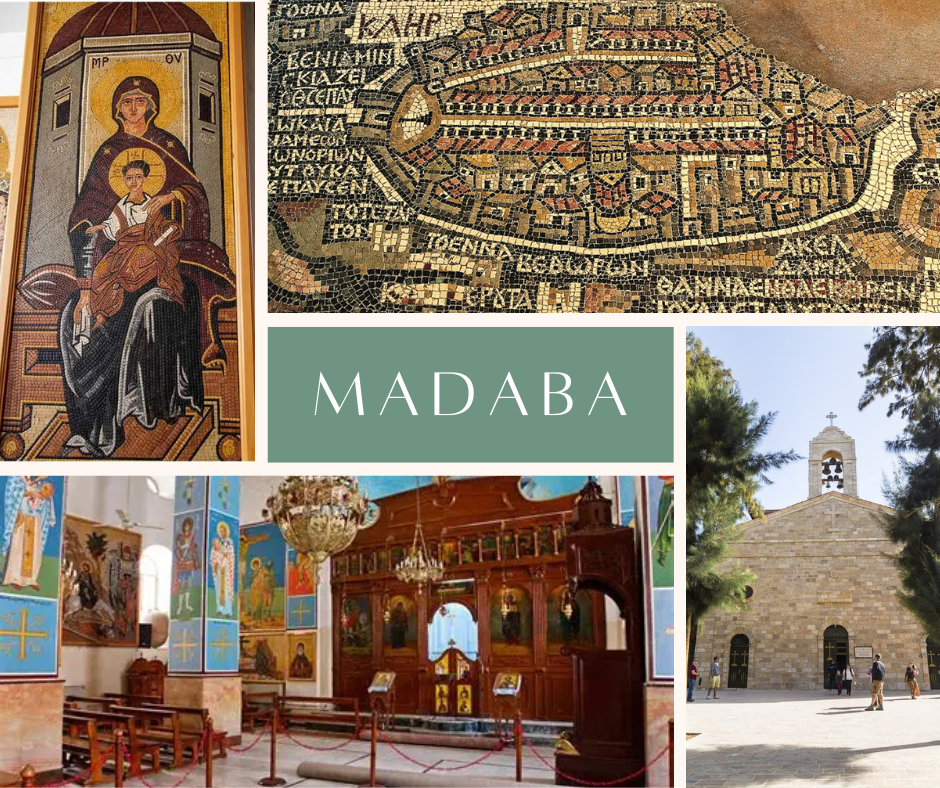
Dating back to around 4500 years, Madaba is noted in the Bible for the notable conquest by King Sihon of Heshbon. Though very little evidence of the city’s regal past remains, there are still some churches and pathways with remnants of the Byzantine era. The mosaics that adorn these ancient buildings provided Madaba with the name ‘City of Mosaics’.
One of the most famous sites in Madaba is St George’s Church, which is home to the largest mosaic map in the world. Visitors flock to this Greek Orthodox Church to catch a glimpse of the map, which was rediscovered by builders in 1884. It was originally built into a Byzantine church and is the oldest map of Palestine on record, believed to have been created in 560 AD.
Church of the Apostles features a stunning mosaic floor depicting the Oceanus and various sea creatures, created by the artist Salamanios in 578 AD. The intricate design and vivid colors of the mosaic make it a standout attraction in Madaba. The church itself is a beautiful example of early Christian architecture and is worth visiting for its historical and artistic value.
The Madaba Archaeological Park, built in 1991 AD near the Madaba Visitors Center, consists from ancient archeological groups such as the Roman Road, Hippolytus Hall, Church of Prophet Elias, Crypt of Saint Elianos, Church of the Virgin Mary and the Mosaic Exhibition. The ancient Roman Road separates the city and leads to the gates of its ancient walls. This road is characterized by its cobbled stones and its surrounding columns dating back to the Byzantine and Roman periods.