
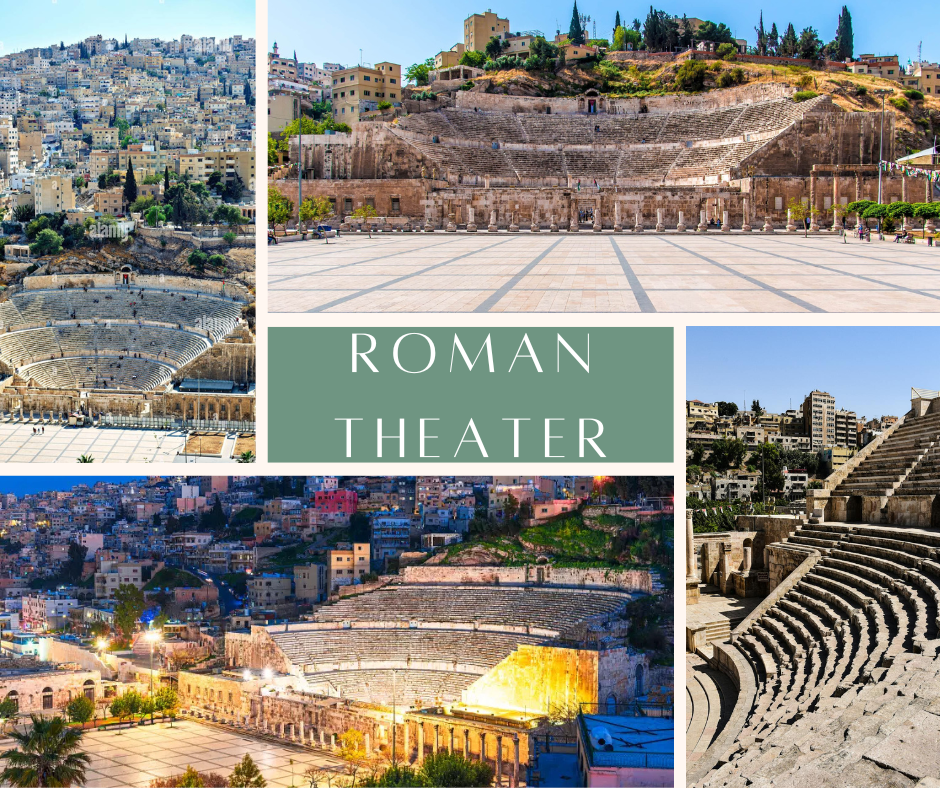
This stunningly restored Roman Theater is the crown jewel of Amman’s historical treasures, showcasing the grandeur of Roman Philadelphia.
Nestled into the northern slope of a hill, this awe-inspiring amphitheater seats 6,000 and captivates visitors with its ancient splendor. For the most enchanting photographs, visit in the morning when the light is gently diffused, or capture the breathtaking vistas from the top tiers just before sunset.
Under Roman rule, Amman was chosen as the glittering capital of the Roman Empire, but the city was then called Philadelphia, after its Ptolemaic ruler, Philadelphus.
Built during the peaceful reign of Antonius Pius around 140 AD (some sources claim it was during the reign of Marcus Aurelius) in the Roman city of Philadelphia – now Amman, Jordan – Amman Roman Theatre was a thriving cultural hub built into the hillside.
The acoustics, as they are in virtually all remaining Roman theatre complexes, are excellent.
The cavea, the semicircular seating space carved into the Jabal Al-Jofeh hill in three horizontal sections with a total of 44 rows can seat around 6,000 people. It faces north so that the audiences are protected from the sun.
The standard three tier layout meant the rulers sat on the bottom, closest to the action, the military and assorted dignitaries took the middle tier and the general public had to squint from the top. The forum in front of the theatre was added by Commodus (famously played by Joaquin Phoenix in the 2001 film Gladiator), although now the only physical remains are a long Corinthian colonnade and some Roman paving stones.
The government of Jordan started restoring the theatre in 1957. unfortunately, none of the original material was used in the process, yet the final outcome is certainly impressive.
Today, the Roman Theatre is again in use for performances, concerts, and events. In addition, halls on both sides of the stage house two small heritage museums: The Folklore Museum and the Museum of Popular Traditions.
The row of columns in front of the theatre is what remains of the colonnades which flanked the Roman Forum, a public square, once among the largest of the Empire (100 x 50 metres). East of it is the Odeon, a smaller Roman auditorium for musical performances.
Its clever design, carved into the hillside, ensured optimal acoustics and visibility from every seat, creating an unforgettable experience for audiences. Whether you’re exploring its 33 rows of ancient tiers or imagining the vibrant performances and gatherings of a bygone era, this architectural masterpiece offers a journey through time.
With the stunning backdrop of Amman’s Citadel looming above, the Roman Theater stands as a testament to the city’s long-standing cultural significance.